Week 1: Two Cultures
April 12, 2024
I would be excited to be part of this course, which conducts an analysis of how the two cultures—science and humanities—interact. My studies in architecture included the topic itself; it was a part of the two interconnected cultures that can be described as uniting the precision of a technical approach with that of the vision of an artist. Victoria Vesna's idea of the "Third Culture," presented in Toward a Third Culture: Being in Between, spoke directly to me in light of my academic trajectory and personal interests. Vesna's idea is a celebration of the harmonious relationship of art with science, the crossroads at which innovation is created through respect for the dialogue of one discipline with the other. Like David Dixon says, "It is often heard that an architect 'must be good at math.' A more common truth is that an architectural firm must have a balance of artists and scientists to make a significant impact on the communities they serve."

Figure 1. An Architect needs to balance between art and science
The fact that some of the articles I read, including C.P.'s seminal work The Two Cultures and the Scientific Revolution. Snow makes rather clear the fact that between the scientific and the literary mind, a chasm exists, deep with historical roots and contemporary implications of great import. This division is symbolically represented at the University of California, Los Angeles by the geographic split between the North and South Campuses, which mirrors more the broad academic split between the humanities and sciences. Both literally and metaphorically, this division characterizes the social dynamics of the campus and the sense of this educational landscape. According to Justin Jung, in A Campus Divided, "Majors like economics and psychology, straddling the line between STEM and humanities, have found themselves in the midst of a cross-campus crossfire." However, the changes were not absolute.

Figure 2. UCLA Royce Hall is Divided into Two Parts Represent Art and Science
Interacting with such views has changed my view on the role of interdisciplinary studies. The need is to comprise different educational frameworks, including the one that stimulates creative problems to find innovative thinking. This goes a long way beyond academic development to personal and professional development, wherein understanding the scientific principles and their intermingling with humanistic concern is necessary in this field of architecture.
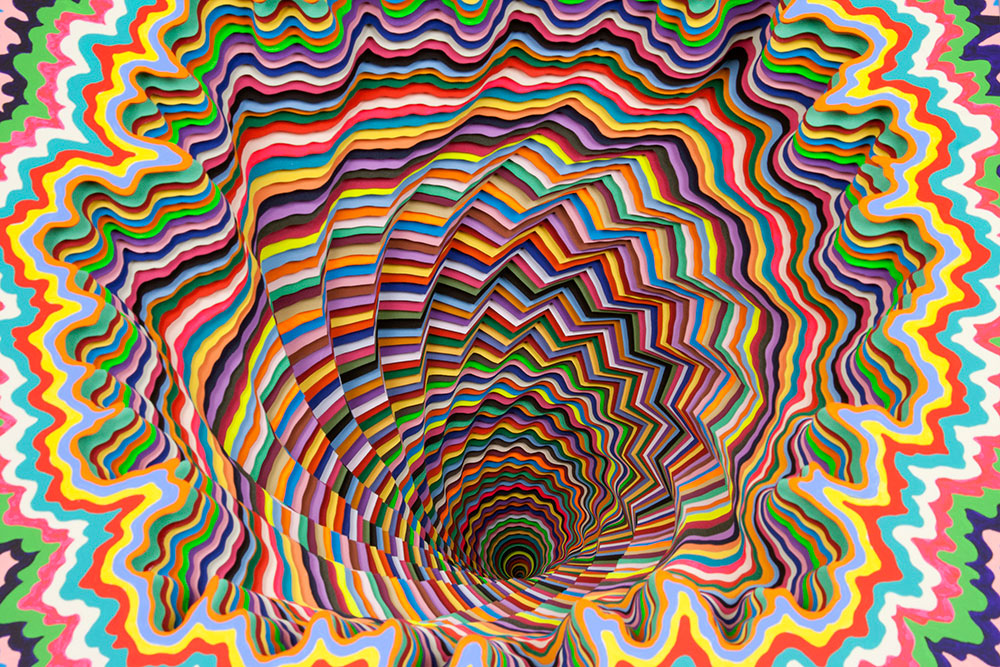
Figure 3. Paper Sculpture Work from Jen Stark
References
Vesna, Victoria. “Toward a Third Culture: Being in Between.” Leonardo, vol. 34, no. 2, 2001, pp. 121–125., https://doi.org/10.1162/002409401750184672.
Jung, Justin (2021). A Campus Divided, https://prime.dailybruin.com/justinnorth&southcampus
Bogatz, Timothy(2017). 11 Fascinating Artists Inspired by Science. https://theartofeducation.edu/2017/10/11-fascinating-artists-inspired-science/
Dixon, David. The Art & Science Behind Architecture.
https://cgdarch.com/news-the-art-science-behind-architecture/. Accessed April 12, 2024.
Comments
Post a Comment