Week 7: Neuroscience+Art
May 19, 2024
Being a 34-year-old junior year architecture student at UCLA, a veteran, and a mother of two, my life experiences are quite diversified. Born in China, my view of medical technologies derives from a personal level and the fantastic artistic projects we explore in class. This week, I am exploring the connection of neuroscience, art, and medical technologies with respect to the artistic output of Victoria Vesna, particularly her project "Octopus Brainstorming" and the larger topic of neurofeedback art.
One of the most striking things about Vesna's "Octopus Brainstorming" is the use of electroencephalography (EEG) technology in building a performative installation to link human and animal consciousness. The participants put on octopus-shaped crowns, equipped with EEG sensors, through which the brainwave frequencies are measured. These measured frequencies are then translated into visual and auditory output, creating an overlapped meditative ambiance between participants that underlines the oneness of all conscious beings (Albu, 2021). This artistic work finds a strong echo in my life, having had experiences as a veteran where mental states are of the utmost importance. Given the methods that can be used to represent and align brain activities, the possibility it offered in examining different mental health states and consciousness is marvelous.

Fig. 1. Victoria Vesna’s "Octopus Brainstorming" – Participants wearing octopus-shaped crowns equipped with EEG sensors.
To me, medical technologies have played a very center role in life. As a mother, medical advancements in prenatal and postnatal care made sure that my children were healthy and well. From that point of view, the progress of such technologies as ultrasound imaging was my window into how a child developed, similar to how an EEG in "Octopus Brainstorming" offers a window into our neural activities. To say more, it is an echo of my living experience involving the literary/artistic waves of the brain that further points out how dramatic the medical technologies' changes are in terms of understanding and enhancing human experiences.
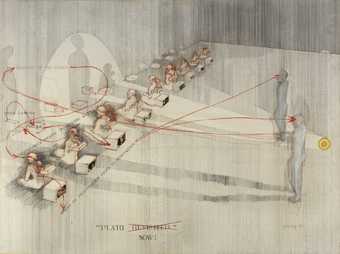
Fig. 2. Juan Downey’s "Plato Now" – A historical use of EEG in art.
This week, the readings and videos connected me with a whole new way of realizing how art might embrace and deploy medical technologies in the fostering of new forms of expression and connection. Historical elucidation on the background information of, say, the early uses of EEG in art—by pioneers such as Juan Downey and Nina Sobell—illustrates the longstanding relations between art and science. His "Plato Now" used EEG as a means of creating a meditative experience, signifying the potential of biofeedback to boost self-awareness and interpersonal connections. Not only that, but these things, being philosophically pointed towards the future, give me an appreciation of how much they can also create this kind of re-enchantment with our world. In so many ways, Ascott's "planetary technoetics" married with Vesna in asking for a more holistic view of how we're all truly interconnected. As an architectural student, this further motivates how spaces can also be designed to increase mental health through technology and art.
The representation of brain activity, whether in its physiological state or in medical technological settings or in artistic installations, all of it appears to me as a means to create empathy—an understanding of the mind and assurance of mental well-being. Through the Victoria Vesna project "Octopus Brainstorming" and the historical context that biofeedback art provides, I was simply exposed to the immense potential for the revolution of our understanding of consciousness and connection that these technologies hold. These insights will for sure lead me in my actions both throughout my studies and in my personal life as I thread my way through the complex relationships between technology, art, and human experience.
Comments
Post a Comment